
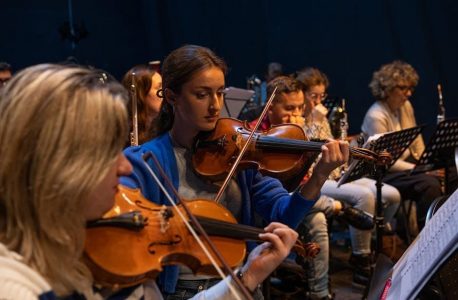
This manual guides composers, arrangers, and performers through orchestral intricacies, covering score comprehension, part learning, and collaborative playing techniques for a unified sound.
The Role of the Conductor
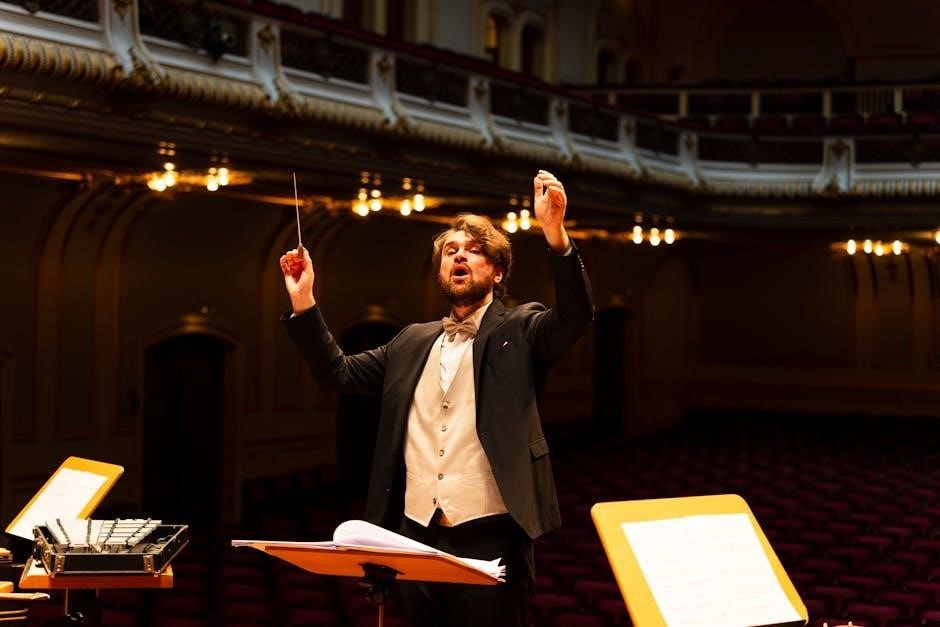
The conductor serves as the orchestra’s artistic leader and interpreter, translating the composer’s intentions into a cohesive performance. Beyond simply keeping time, they shape phrasing, dynamics, and balance, ensuring all sections blend harmoniously.
Effective conducting demands a deep understanding of the score, meticulous rehearsal planning, and exceptional communication skills. The conductor guides musicians through complex passages, clarifies ambiguities, and fosters a shared artistic vision.
They are responsible for ensemble precision, intonation, and stylistic consistency, ultimately unifying individual performances into a singular, expressive whole. A skilled conductor inspires musicians to exceed their technical capabilities and deliver a captivating musical experience.
Understanding the Score
Deciphering an orchestral score requires a comprehensive grasp of musical notation, including key signatures, time signatures, and rhythmic values. Musicians must accurately interpret dynamics, articulation markings, and tempo indications to realize the composer’s intent.
Familiarity with orchestral instrumentation and ranges is crucial, enabling players to anticipate their parts within the larger ensemble texture. Understanding how different sections interact and contribute to the overall sound is paramount.
Scores often contain detailed instructions regarding phrasing, balance, and stylistic nuances, demanding careful study and thoughtful interpretation by each performer to achieve a unified and expressive performance.
Orchestral Sections and Their Instruments
The orchestra comprises strings, woodwinds, brass, and percussion, each section contributing unique timbres and textures to create a rich, dynamic sonic palette.
String Section: Violins, Violas, Cellos, and Double Basses
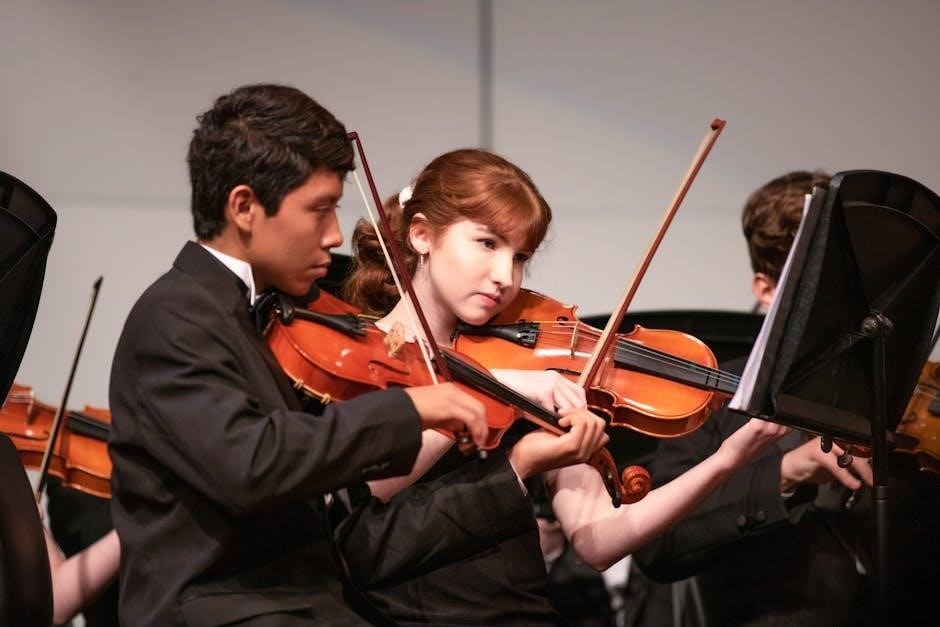
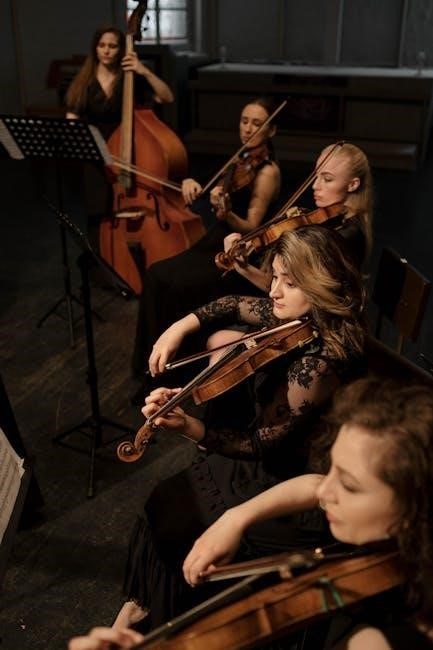
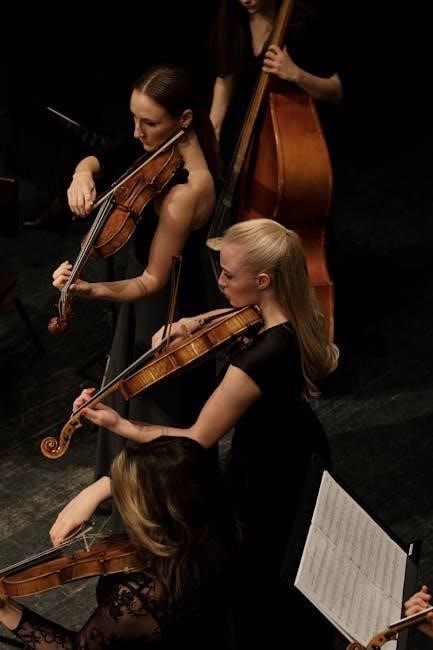
The string section forms the orchestra’s core, providing foundational harmonies and melodic lines. Violins, divided into first and second, typically carry the highest melodic material, demanding precision and intonation. Violas, utilizing the alto clef, offer a warm, resonant tone, bridging the gap between violins and cellos.
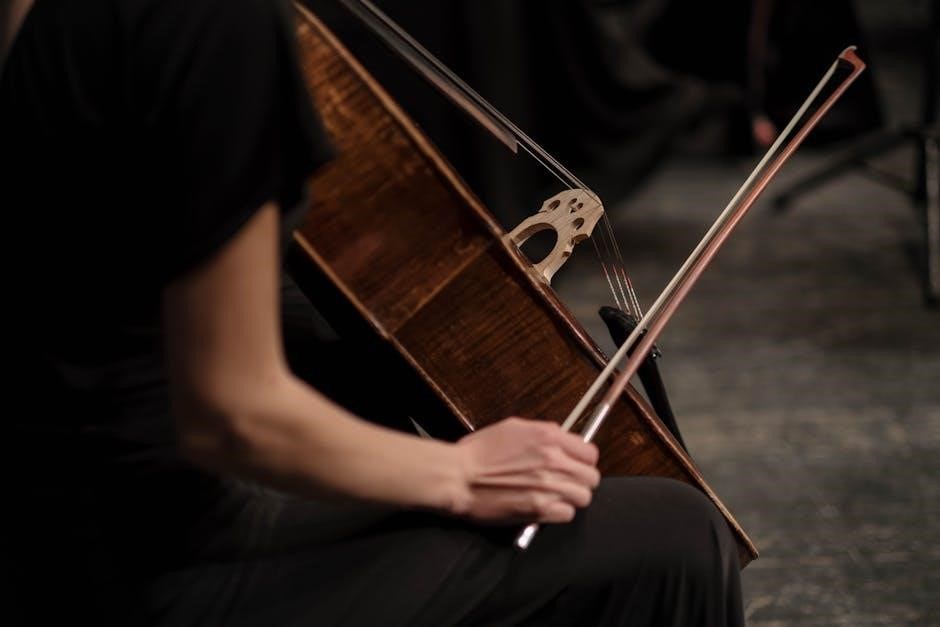
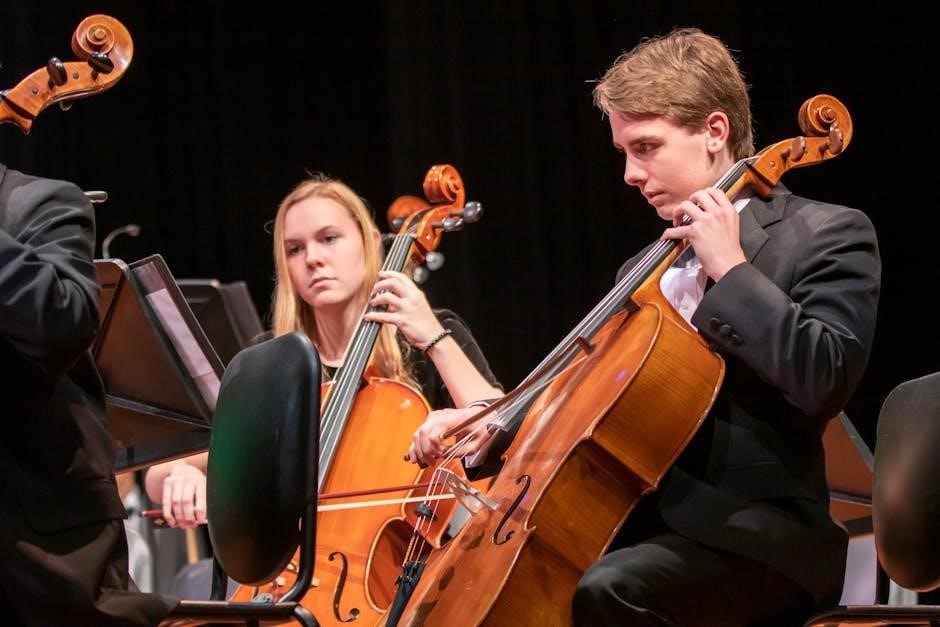
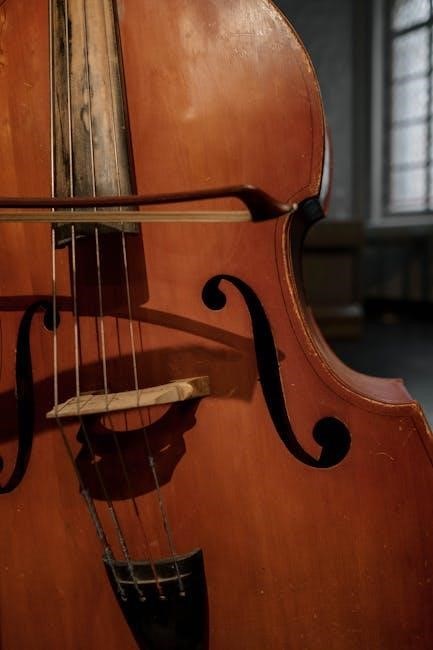
Cellos contribute a rich, lyrical voice, often playing countermelodies or harmonic support. Double basses anchor the ensemble with their deep, resonant tones, establishing the harmonic foundation. Effective string playing requires synchronized bowing techniques, consistent vibrato, and careful attention to dynamic nuances. Mastering these elements ensures a cohesive and expressive string sound, vital for orchestral balance and impact.
Woodwind Section: Flutes, Oboes, Clarinets, and Bassoons
The woodwind section introduces diverse timbres and colors to the orchestral palette. Flutes, known for their bright and agile sound, often handle rapid passages and soaring melodies. Oboes, with their distinctive reedy tone, contribute expressive solos and blend seamlessly with strings.
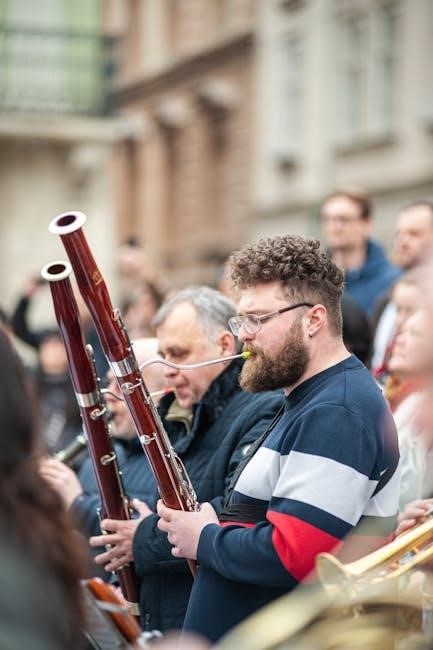
Clarinets offer remarkable versatility, capable of both delicate lyricism and powerful projection. Bassoons provide a warm, woody bass voice, often doubling the cellos or creating harmonic depth. Woodwind players must prioritize precise articulation, breath control, and blend within the section and with the broader ensemble. Achieving a unified woodwind sound enhances the orchestra’s overall texture and expressiveness.
Brass Section: Trumpets, Horns, Trombones, and Tubas
The brass section delivers power, brilliance, and dramatic impact to the orchestra. Trumpets, with their penetrating sound, often announce important themes and provide rhythmic drive. Horns offer a mellow, rounded tone, capable of both lyrical melodies and majestic fanfares.
Trombones contribute a rich, sonorous voice, frequently used for harmonic support and dramatic gestures. Tubas provide a solid foundation, anchoring the harmonic structure with their deep resonance. Brass players must focus on precise intonation, dynamic control, and blending their sound within the section and with the ensemble, ensuring clarity and impact.
Percussion Section: Timpani, Snare Drum, Cymbals, and More
The percussion section provides rhythmic vitality, color, and dramatic effects. Timpani establish harmonic grounding and create suspense through rolls and tuned pitches. Snare drums deliver crisp rhythmic accents, driving the pulse and adding energy. Cymbals offer shimmering washes of sound, enhancing climaxes and adding textural variety.
Beyond these core instruments, the percussion family encompasses a vast array of sounds, from delicate chimes to thunderous bass drums. Percussionists must demonstrate precision, rhythmic accuracy, and sensitivity to dynamics, contributing significantly to the orchestra’s overall sonic palette and dramatic impact.
Reading Orchestral Parts
Decoding scores requires understanding key signatures, time signatures, rhythmic notation, and dynamic/articulation markings – essential skills for accurate orchestral performance and interpretation.
Key Signatures and Time Signatures
Mastering key signatures is fundamental; they dictate sharps or flats, establishing the tonal center for each orchestral part. Musicians must instantly recognize these to play the correct pitches throughout a piece. Time signatures, conversely, define the rhythmic framework – how many beats reside within each measure and what note value receives one beat.
Accurate interpretation demands a collective understanding of these symbols. A change in key or time signature impacts every instrument, requiring synchronized adjustments. The conductor’s clear indication of these changes is crucial, ensuring the entire orchestra remains aligned rhythmically and harmonically. Consistent practice reading and internalizing these elements builds fluency and prevents ensemble errors, fostering a cohesive and polished performance.
Understanding Rhythmic Notation
Precise rhythmic execution is the bedrock of orchestral cohesion. Musicians must decipher note values – whole, half, quarter, eighth, and sixteenth notes – and their corresponding rests. Dotted notes extend duration, while ties connect notes across beats.
Syncopation and tuplets introduce rhythmic complexity, demanding careful attention. The orchestra’s unified pulse relies on each player’s accurate interpretation of these nuances. The conductor establishes tempo and subdivides beats, guiding the ensemble. Consistent practice with rhythmic exercises, alongside score study, cultivates internal rhythmic stability, ensuring a tight and expressive performance where every section breathes as one.
Dynamics and Articulation
Orchestral expression hinges on nuanced dynamics and articulation. Composers utilize markings like p (piano – soft), f (forte – loud), crescendos, and diminuendos to shape musical phrases. Articulation symbols – staccato, legato, marcato – dictate how notes are attacked and connected.
A unified interpretation requires collective sensitivity. The conductor communicates dynamic intent, while section leaders ensure consistent execution within their groups. Players must blend their articulations, creating a cohesive sonic texture. Mastering these elements transforms a technically proficient performance into a deeply emotive and compelling musical experience, showcasing the orchestra’s full expressive potential.
Clef Usage in Orchestral Scores
Understanding clefs—treble, alto, and bass—is crucial for deciphering orchestral parts, enabling accurate reading and performance across diverse instrument ranges.
Treble Clef
The treble clef, also known as the G clef, is a foundational element in orchestral music, prominently featuring in violin, flute, and clarinet parts. Its distinctive curl circles the second line from the bottom, designating that line as G above middle C. This clef facilitates easier reading for higher-pitched instruments, avoiding excessive ledger lines.
Musicians proficient in treble clef can quickly interpret notes within its range, crucial for swift and accurate ensemble playing. Mastering this clef allows for seamless communication between sections, ensuring harmonic cohesion and rhythmic precision. Recognizing its prevalence across numerous orchestral instruments is vital for all musicians, fostering a shared understanding of the score and enabling collaborative performance.
Alto Clef (Viola)
The alto clef, a C-clef, uniquely positions middle C on its third line, specifically designed for the viola’s comfortable range. While seemingly unusual at first, this clef avoids excessive ledger lines, enabling violists to read music efficiently and expressively. Understanding the alto clef is crucial for orchestral musicians, as it directly impacts communication with the viola section.
Recognizing the alto clef allows all orchestra members to follow viola parts during rehearsals and performances, fostering better ensemble cohesion. It’s essential for conductors to be fluent in this clef to effectively guide the violas and ensure their contribution blends seamlessly with the overall orchestral texture, creating a balanced and harmonious sound.
Bass Clef
The bass clef, also known as the F clef, centers around the F line, serving as the foundational notation for lower-pitched instruments like cellos, double basses, trombones, and tubas. Mastery of the bass clef is paramount for orchestral musicians playing these instruments, enabling accurate reading and performance of their respective parts.
For the entire orchestra, understanding the bass clef’s role is vital for interpreting the harmonic foundation and rhythmic drive of a composition; Recognizing bass lines allows musicians to anticipate changes, maintain ensemble balance, and contribute to a cohesive sound. Conductors must demonstrate fluency in the bass clef to effectively guide these sections and ensure a powerful, resonant orchestral performance.
Orchestral Layout and Seating Arrangements
Strategic instrument placement optimizes sound projection and balance, ensuring clear communication between sections and a unified, immersive experience for both performers and audiences.
Standard Orchestral Setup
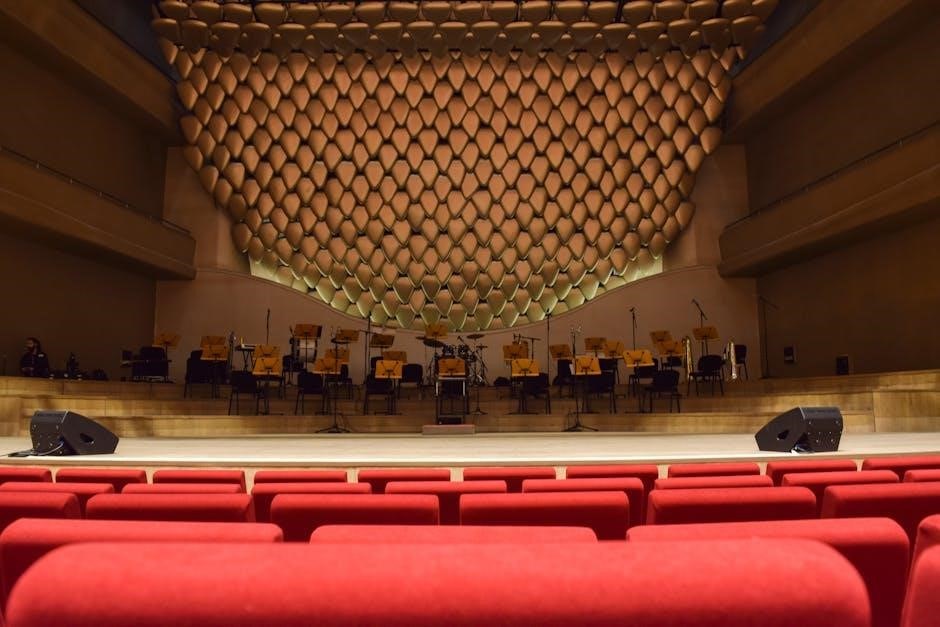
The conventional orchestral arrangement prioritizes acoustic balance and visual clarity. Strings typically occupy the front, with violins divided left and right of the conductor, followed by violas, cellos, and basses. Woodwinds are positioned centrally behind the strings, often elevated for better projection.
Brass instruments, requiring greater volume, are usually placed at the back, with trumpets and horns flanking the percussion section. Timpani and prominent percussion instruments are centrally located for optimal audibility.
This layout isn’t rigid; adjustments occur based on the piece and venue acoustics. Careful consideration of instrument ranges and blending capabilities guides seating decisions, ensuring a cohesive and impactful sonic experience for the ensemble and audience.
Considerations for Stage Size and Acoustics
Stage dimensions significantly impact orchestral layout and sound projection. Smaller stages necessitate compact arrangements, potentially layering sections or reducing instrumental forces. Larger stages allow for greater separation, enhancing clarity and dynamic range.
Acoustics are paramount; reflective surfaces amplify sound, while absorbent materials dampen it; Orchestras in “dead” spaces require closer proximity and increased volume, whereas “live” spaces demand careful balancing to avoid muddiness.
Adjustments to instrument placement, such as angling sections towards the audience or utilizing sound reflectors, optimize the listening experience, ensuring every note resonates effectively within the performance hall.
Rehearsal Techniques for the Orchestra
Effective rehearsals blend sectional work with full ensemble practice, addressing balance, intonation, and rhythmic precision to refine the orchestral performance.
Sectional Rehearsals
Sectional rehearsals are crucial for focused development, allowing instrument groups – strings, woodwinds, brass, and percussion – to refine their individual parts before combining. These sessions prioritize technical accuracy, intonation, and stylistic consistency within each section.
Conductors often lead these, or assign experienced players to guide their sections, addressing specific challenges in the score. This targeted approach improves ensemble cohesion. Players can explore phrasing, dynamics, and articulation details, fostering a deeper understanding of their roles.
Effective sectional work minimizes wasted time during full rehearsals, ensuring a more productive and polished overall sound. It’s a foundational step towards a successful orchestral performance, building confidence and musicality.
Full Orchestral Rehearsals
Full orchestral rehearsals integrate individual sections, demanding attentive listening and precise coordination. The conductor shapes the overall interpretation, balancing dynamics, phrasing, and tempo across the ensemble. Initial run-throughs focus on establishing fundamental accuracy – notes, rhythms, and entrances – identifying problem areas for focused work.
Subsequent rehearsals refine musical details, addressing blend, balance, and stylistic nuances. The conductor provides feedback, guiding players toward a unified artistic vision. Communication is key; players must respond to cues and adjust their playing accordingly.
These sessions build ensemble awareness, fostering a collaborative spirit essential for a compelling performance. Careful attention to intonation and ensemble unity is paramount.
Addressing Common Ensemble Issues
Ensemble challenges often stem from rhythmic imprecision, intonation discrepancies, or balance problems. The conductor must diagnose these issues swiftly, employing targeted exercises to correct them. Rhythmic instability can be addressed through focused counting and subdivision drills, ensuring collective pulse accuracy.
Intonation issues require careful listening and adjustments, potentially involving sectionals or individual attention. Balance problems necessitate dynamic adjustments, encouraging players to listen to surrounding sections and modify their volume accordingly.
Effective communication and a willingness to adapt are crucial. The conductor’s role is to facilitate a collaborative environment where musicians can address challenges constructively, ultimately achieving a cohesive and polished sound;
Preparing for a Performance
Prior to performance, meticulous tuning and warm-up routines are essential, alongside strict adherence to stage etiquette and concert protocols for a seamless show.
Tuning and Warm-up Procedures
Orchestral tuning begins with the oboe’s A, establishing a standard pitch for all instruments. Following this, each section meticulously tunes amongst themselves, ensuring harmonic alignment. Warm-up exercises should be systematic, starting with long tones to develop embouchure and breath control.
String players practice scales and arpeggios, focusing on intonation and bow technique. Woodwinds engage in similar exercises, emphasizing tone quality and articulation. Brass players work on lip slurs and range extension. Percussionists refine rhythmic precision and dynamic control.
A full orchestral warm-up, guided by the conductor, integrates these individual preparations, culminating in brief excerpts from the repertoire to solidify ensemble cohesion before the performance begins.
Stage Etiquette and Concert Protocol
Orchestral musicians maintain focused silence during performances, minimizing extraneous movements and noises. Concert attire is typically formal – black concert wear is standard – projecting a unified and professional image. Following the conductor’s entrance, a respectful bow acknowledges the audience before commencing the performance.
During the music, players maintain eye contact with the conductor, responding to cues and shaping the musical phrasing. Applause is reserved for the conclusion of a piece or the entire concert, not between movements.
Post-concert, musicians remain seated until the conductor has lowered their baton, signaling the end of the performance and allowing for a coordinated acknowledgement of the audience’s appreciation.