

Dodgeball Rules: A Comprehensive Guide (2026)
Dodgeball, a team sport involving throwing balls to eliminate opponents, is easily accessible with minimal equipment—balls and a court are sufficient for play.
Dodgeball is a dynamic team sport enjoyed by diverse age groups, requiring agility and strategic throwing to eliminate opposing players. Played with soft rubber balls, it emphasizes dodging, catching, and teamwork. This guide details the rules, strategies, and variations, ensuring a fun and safe experience for all participants, from casual games to competitive tournaments.
History and Evolution of Dodgeball
Dodgeball’s origins trace back to early 20th-century games involving throwing balls at opponents, evolving from more aggressive forms. Over time, rules were refined for safety and fair play, gaining popularity in schools and recreation centers. The 2004 film “Dodgeball” boosted its cultural presence, fostering competitive leagues globally.
Basic Dodgeball Equipment

Essential dodgeball equipment includes a soft, rubber ball—similar in size to a volleyball or beachball—and a clearly defined playing court. A minimum of five balls is recommended for a dynamic game. Protective gear isn’t always required, but may be considered for enhanced safety during competitive play.
Required Balls & Court Dimensions
Dodgeball utilizes a soft rubber ball, volleyball-sized, for safe play. Court dimensions vary, but generally consist of a rectangular area, often utilizing gymnasium lines. Matches are played over two 15-minute halves, with a 5-minute halftime break for strategic adjustments and player recovery.
Safety Considerations for Equipment
Dodgeball prioritizes safety; soft, non-leather balls minimize injury risk. Thoroughly inspect balls for damage before each game. Warm-up exercises and stretching are crucial to prevent muscle strains. Protective gear isn’t typically required, but may be considered for sensitive players during intense play or tournaments.
Core Gameplay Mechanics
Dodgeball’s core involves teams eliminating opponents by legally hitting them with thrown balls. Players attempt to dodge incoming balls, and can reinstate teammates by catching thrown balls. Simultaneous grabbing and rolling balls to teammates are permitted, fostering dynamic team play and strategic ball movement.
Starting the Game & Initial Rush
A dodgeball match begins with balls positioned along the center line; players rush to retrieve them. This initial scramble is crucial for gaining early ball control and establishing offensive or defensive positions. Teams strategically position themselves, anticipating throws and preparing for the fast-paced action that follows.
Throwing Techniques & Strategies
Effective throws in dodgeball involve a combination of power, accuracy, and deception. Players utilize various techniques, including overhand, sidearm, and roll throws, to target opponents. Strategic throws aim for open targets or exploit defensive weaknesses, while feints can mislead opponents and create opportunities.
Elimination Rules
Players are eliminated when directly hit by a live thrown ball, unless the ball is blocked by another ball or caught. A valid hit results in immediate removal from the game; however, catching an opponent’s throw reinstates a teammate, offering a crucial defensive and offensive advantage.
Getting Hit: Valid & Invalid Hits

A valid hit occurs when a live ball strikes a player directly, forcing their elimination. Conversely, hits deflected by another ball, or impacting a player already eliminated, are invalid. Headshots are often disallowed, prioritizing player safety, and touching the ball doesn’t negate a hit.
Catching a Ball: Reinstating Teammates
A skillful catch of a thrown ball not only prevents elimination but also strategically reinstates a previously eliminated teammate back into the game. This dynamic adds a layer of risk and reward, encouraging aggressive plays and defensive prowess. Successful catches shift momentum dramatically.
Court Boundaries & Out-of-Bounds Rules
Clearly defined playing areas are crucial; a ball crossing these boundaries is declared out-of-bounds, awarding possession to the opposing team. Boundaries encompass all lines, demanding precise throws and agile movements. Understanding these rules prevents disputes and maintains fair gameplay during intense matches.
Defining the Playing Area
The dodgeball court typically features a central line dividing two equal halves, with attack lines near each team’s end line. These lines dictate initial rushes and restrict crossing before the ball is in play. Boundary lines clearly mark the perimeter, defining legal playing space for all participants.
What Happens When a Ball Goes Out?
When a thrown dodgeball crosses the boundary lines, it’s considered out-of-bounds, and possession immediately transfers to the opposing team at the point where it exited. Retrieving out-of-bounds balls is typically done by players designated for that task, ensuring swift resumption of gameplay.
Team Composition & Player Roles
Dodgeball teams generally consist of an equal number of players, typically ranging from six to ten individuals per side, depending on the court size and league regulations. Teams employ offensive players focused on eliminating opponents and defensive players prioritizing ball blocking and evasion.
Number of Players Per Team
Standard dodgeball matches usually feature teams with six players each, though this can vary based on competition level and available court space. Some leagues allow for larger rosters, enabling substitutions during gameplay, while recreational games may adjust numbers for inclusivity and dynamic play.
Offensive vs; Defensive Strategies
Offensive play focuses on aggressive throws to eliminate opponents, utilizing feints and varied throwing angles. Defensive strategies prioritize dodging, blocking, and catching to protect teammates and create counter-attack opportunities; a balanced approach, shifting between offense and defense, is crucial for success.
Game Duration & Scoring
Dodgeball matches typically consist of two 15-minute halves, separated by a 5-minute halftime break. Matches are divided into sets, with teams aiming to eliminate all opposing players to win a set; the overall winner is determined by best-of-three or best-of-five sets.
Length of Halves & Half-Time
Standard dodgeball games feature two halves lasting 15 minutes each, providing ample time for strategic gameplay and player eliminations. A crucial 5-minute halftime break separates these halves, allowing teams to regroup, discuss tactics, and rehydrate before resuming competition.
Determining the Winning Team
A dodgeball match doesn’t have a fixed number of sets; teams strive to completely eliminate the opposing team to win a set. The overall winning team is determined by winning the majority of these sets, showcasing endurance and strategic prowess throughout the entire competition.
Specific Rule Variations
Dodgeball isn’t universally standardized; the International Dodgeball Federation (IDF) and World Dodgeball Federation (WDBF) each maintain distinct rule sets. These variations impact gameplay, emphasizing the importance of understanding the specific regulations governing each tournament or league for fair competition.
International Dodgeball Federation (IDF) Rules
The IDF governs international competition, focusing on a fast-paced, strategic game. Matches consist of two 15-minute halves with a 5-minute break. Elimination occurs upon direct impact; catches reinstate teammates, and gameplay emphasizes skillful throws and agile dodging for victory.
World Dodgeball Federation (WDBF) Rules
The WDBF promotes dodgeball globally, with rules mirroring the IDF’s emphasis on dynamic play. Matches are structured into sets, aiming for opponent elimination through direct hits. Catches revive teammates, and strategic team formations are crucial for success in this competitive, evolving sport.
Common Fouls & Penalties
Illegal throws and contact constitute frequent fouls, alongside stalling tactics designed to delay gameplay. Referees enforce these rules, issuing penalties like player removal or awarding points to the opposing team. Maintaining fair play and player safety are paramount, ensuring a competitive and enjoyable match for all participants.
Illegal Throws & Contact
Fouls occur with headshots, throws after crossing the center line, or any intentional contact beyond a thrown ball. Players must release the ball before crossing the line; aggressive physical contact is strictly prohibited. Referees assess penalties, potentially removing offending players to maintain safety and fair competition.
Stalling & Delay of Game
Penalties are issued for deliberately delaying the game, such as excessively holding the ball without throwing, or repeatedly going out of bounds to waste time. Teams must maintain a reasonable pace; referees will warn offenders before applying penalties like ball possession changes or player removal.
Referee Signals & Responsibilities
Referees oversee matches, enforcing rules and ensuring fair play through clear signals – raised hands for hits, pointing for boundaries, and fist signals for penalties. They maintain authority, make decisive calls, and manage the game’s flow, prioritizing player safety and adherence to established guidelines.
Key Signals Used During a Match
Referees employ distinct hand signals: a raised hand indicates a valid hit, pointing defines out-of-bounds, and a closed fist signals a foul or penalty. These visual cues communicate decisions swiftly and clearly to players and spectators, maintaining game momentum and minimizing confusion during fast-paced action.
Referee Authority & Decision-Making
Referees possess ultimate authority on rule interpretations and gameplay judgments; their decisions are final, ensuring fair play and consistent application of regulations. They manage the match flow, enforce penalties, and resolve disputes, prioritizing player safety and upholding the integrity of the dodgeball competition.

Advanced Strategies & Tactics
Strategic team formations and coordinated movement are crucial for success, alongside mastering blocking and dodging techniques. Offensive plays focus on eliminating opponents, while defensive strategies prioritize ball protection and teammate support, demanding adaptability and quick decision-making throughout the dynamic match.
Team Formations & Movement
Effective formations, like the diamond or triangle, maximize court coverage and passing lanes; Constant, purposeful movement—shifting, faking, and strategic retreats—confuses opponents and creates throwing opportunities. Coordinated advances and retreats are vital for both offense and defense, demanding teamwork and spatial awareness.
Blocking & Dodging Techniques

Successful dodging involves quick footwork, leaning, and anticipating throws; practice is key! Blocking utilizes the ball’s force, redirecting it safely away from the body with forearms. Combining both techniques—evading initial throws and blocking follow-ups—increases survivability and frustrates opposing players during intense matches.
Dodgeball for Different Age Groups
Modifying rules is crucial for age-appropriate play; children’s games emphasize fun and participation, using softer balls and simpler elimination rules. Adult leagues and tournaments demand strategic gameplay, stricter officiating, and potentially faster-paced action, requiring greater physical conditioning and tactical awareness.
Modifications for Children’s Games
For younger players, prioritize safety and inclusivity; utilize softer, larger balls to minimize injury risk. Simplify elimination rules, allowing multiple hits or introducing a “safe zone.” Focus on cooperative play and sportsmanship, emphasizing fun over strict competition, fostering positive experiences for all participants.
Rules for Adult Leagues & Tournaments
Adult play typically adheres to stricter guidelines, often aligning with International or World Dodgeball Federation rules. Matches consist of timed halves with set eliminations, demanding strategic team formations and precise throwing techniques. Emphasis is placed on referee authority, enforcing penalties for fouls and ensuring fair competition.
Safety Regulations & Injury Prevention
Prioritizing safety involves thorough warm-up exercises and stretching to prepare muscles. Protective gear, while not always mandatory, is recommended to minimize impact injuries. Awareness of surroundings and controlled throwing motions are crucial; adhering to rules prevents accidental contact and ensures a secure playing environment.

Warm-up Exercises & Stretching
Effective warm-ups should include light cardio like jogging and dynamic stretches—arm circles, leg swings, and torso twists—to increase blood flow. Static stretches, holding each pose for 20-30 seconds, improve flexibility. Focus on major muscle groups used during play, preparing the body for vigorous activity and reducing injury risk.

Protective Gear Recommendations
While not always mandatory, knee pads and elbow pads can minimize bruising from stray throws, especially for beginners. Athletic shoes with good traction are crucial for quick movements and preventing slips; Consider face masks or protective eyewear in competitive settings to safeguard against eye injuries during intense gameplay.
Resources for Learning More
Explore official websites of the International and World Dodgeball Federations for comprehensive rulebooks and tournament information. Numerous tutorial videos online demonstrate techniques and strategies. Online guides offer detailed explanations of gameplay, scoring, and safety protocols, enhancing your understanding of this dynamic sport.
Official Dodgeball Federation Websites
Access detailed rulebooks and official documentation from the International Dodgeball Federation (IDF) and the World Dodgeball Federation (WDBF) websites. These platforms provide the most accurate and up-to-date regulations for competitive play, including specific guidelines for tournaments and player conduct.
Tutorial Videos & Online Guides
Numerous online resources offer visual demonstrations of dodgeball techniques and rule explanations. Beginner-friendly videos clarify gameplay, throwing strategies, and elimination procedures. Websites provide downloadable rule PDFs and comprehensive guides, assisting players in understanding the nuances of this dynamic and engaging team sport.
Dodgeball in Popular Culture
The 2004 film “Dodgeball: A True Underdog Story” significantly boosted the game’s visibility, portraying it humorously and competitively. Beyond entertainment, dodgeball thrives as a genuine competitive sport, attracting players and tournaments globally. Understanding official dodgeball rules enhances appreciation for its strategic depth.
The “Dodgeball” Movie & its Impact
Rawson Marshall Thurber’s 2004 comedy, starring Ben Stiller and Vince Vaughn, popularized dodgeball, injecting it into mainstream consciousness. While comedic, the film sparked renewed interest in the sport, prompting many to seek out dodgeball rules and participate. It showcased a fun, albeit exaggerated, version of the game.
Dodgeball as a Competitive Sport
Dodgeball has evolved beyond gym class, becoming a globally recognized competitive sport governed by organizations like the International Dodgeball Federation (IDF) and World Dodgeball Federation (WDBF). These bodies establish standardized dodgeball rules, ensuring fair play in tournaments and leagues worldwide, fostering growth and skill development.

Future Trends in Dodgeball
Dodgeball’s future anticipates emerging rule changes and innovations, potentially impacting gameplay and strategy. The sport’s global expansion continues, fueled by increased participation and formalized leagues. Expect further refinement of dodgeball rules by governing bodies, alongside technological advancements enhancing officiating and player performance analysis.
Emerging Rule Changes & Innovations
Dodgeball may see adjustments to set durations and elimination criteria, fostering dynamic matches. Innovations could include varied ball types or court zones, adding strategic depth. Digital scoring and instant replay systems are likely, improving accuracy and fairness. These changes aim to enhance the spectator experience and competitive integrity.
Growth of Dodgeball as a Global Sport
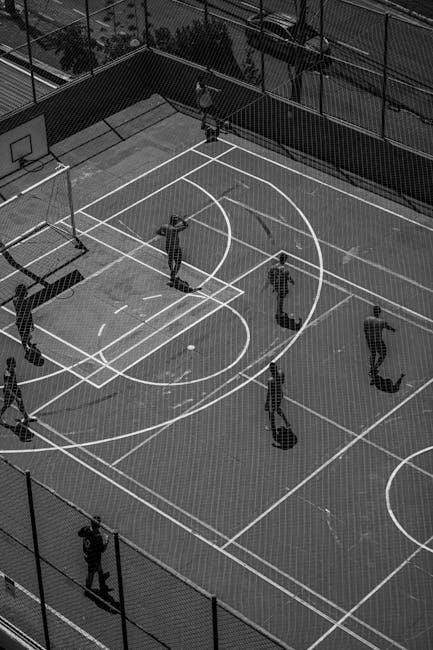
Dodgeball’s increasing popularity is fueled by accessible gameplay and growing competitive scenes worldwide. International federations are standardizing rules, promoting tournaments, and expanding participation. Social media and streaming platforms amplify visibility, attracting new players and fans. This global expansion promises a vibrant future for the sport.